BYD Shark 6 Plug in Hybrid Electric Vehicle - Research, Testing and Everything you need to know [Part 3]
Published on 26th October 2025 by Simon Fearby
This post has been broken down into multiple pages due to it's size.
Chapter: [Part 1], [Part 2], [Part 3].
Charging and Efficiency
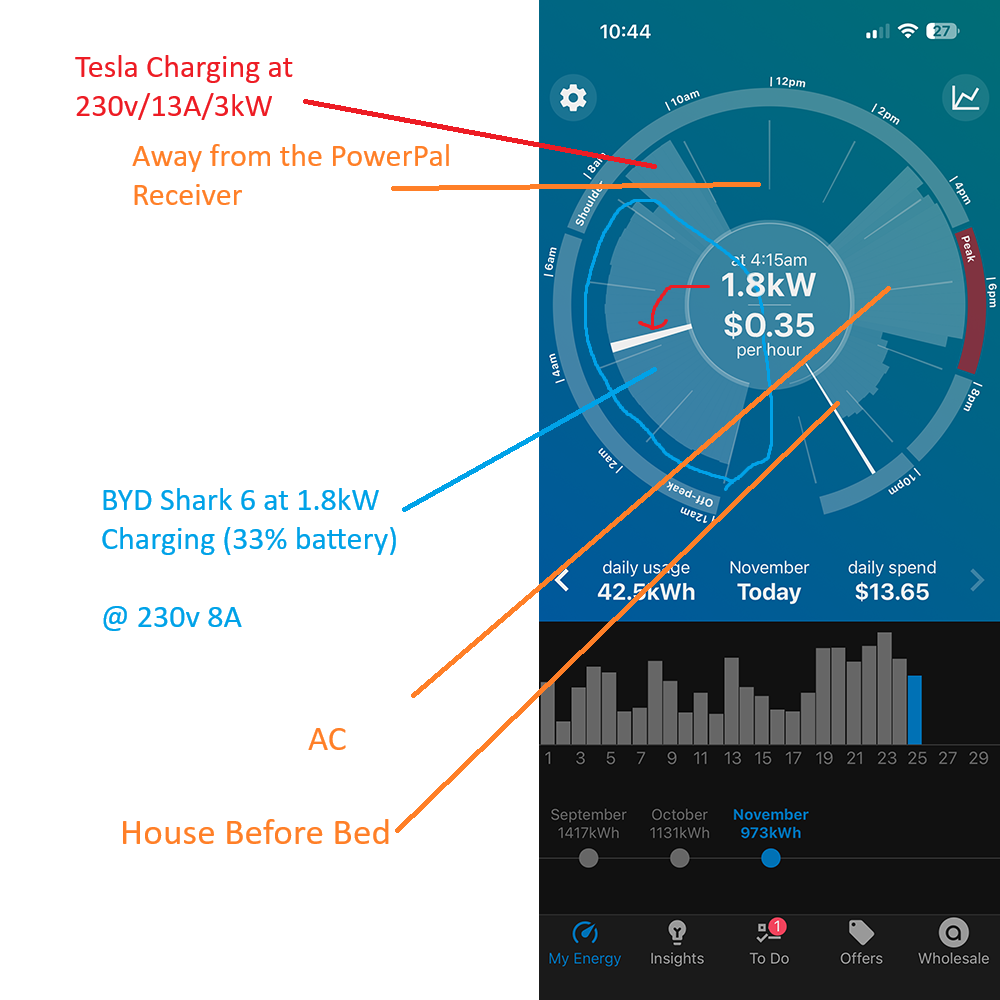
We cannot help notice that the charging experience is not as nice as on a Tesla. Charging is happening on a the provided charge pack (230V/8A or 1.8kW) OK. The Smart charging software (v1.19.2-202503130911) is basic and allows a charging windows and a charge to 100% option that ignores the window.
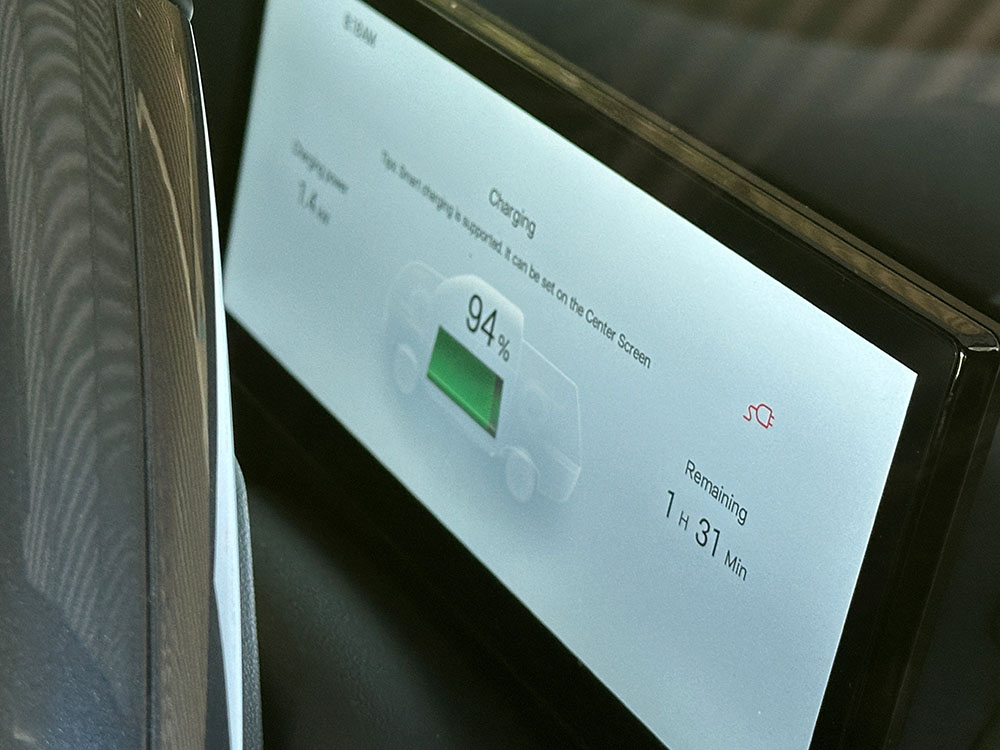
We plugged in for at least 7 hours the first night and wanted to recharge 40% (12kW), The socket was providing 1.8kW and this should have charged in 6.6 hours (if 100% efficient) but by 7AM the car was still charging outside the allowed window and was only at 94% (2kW lower than expected and a few hours behind, the charger might not be very efficient?
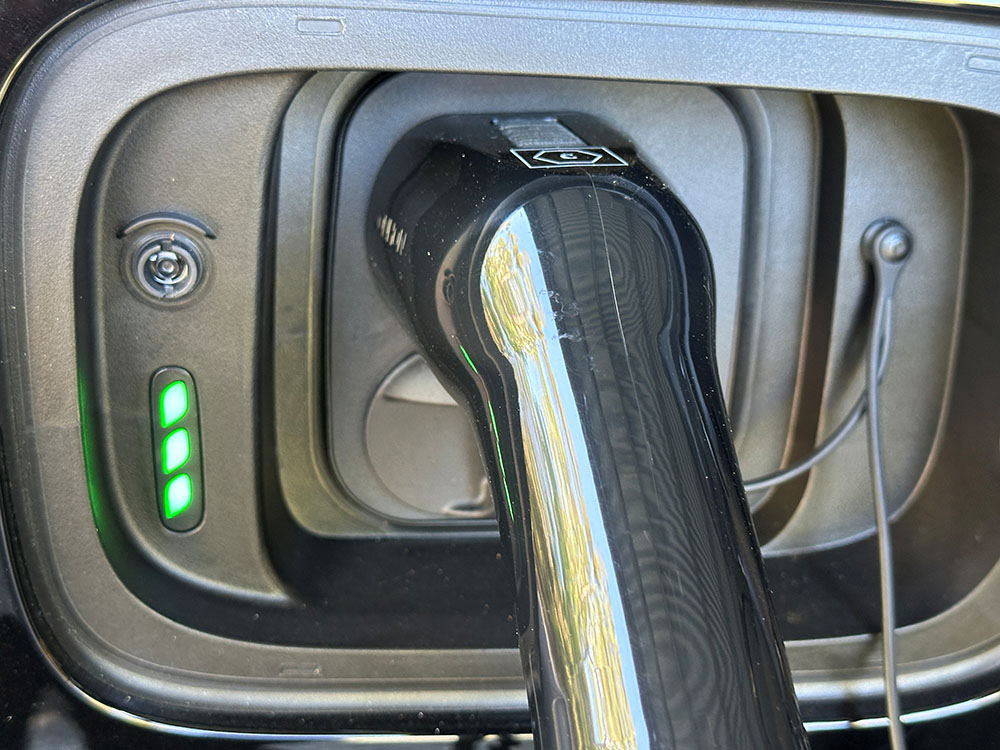
Plugged In
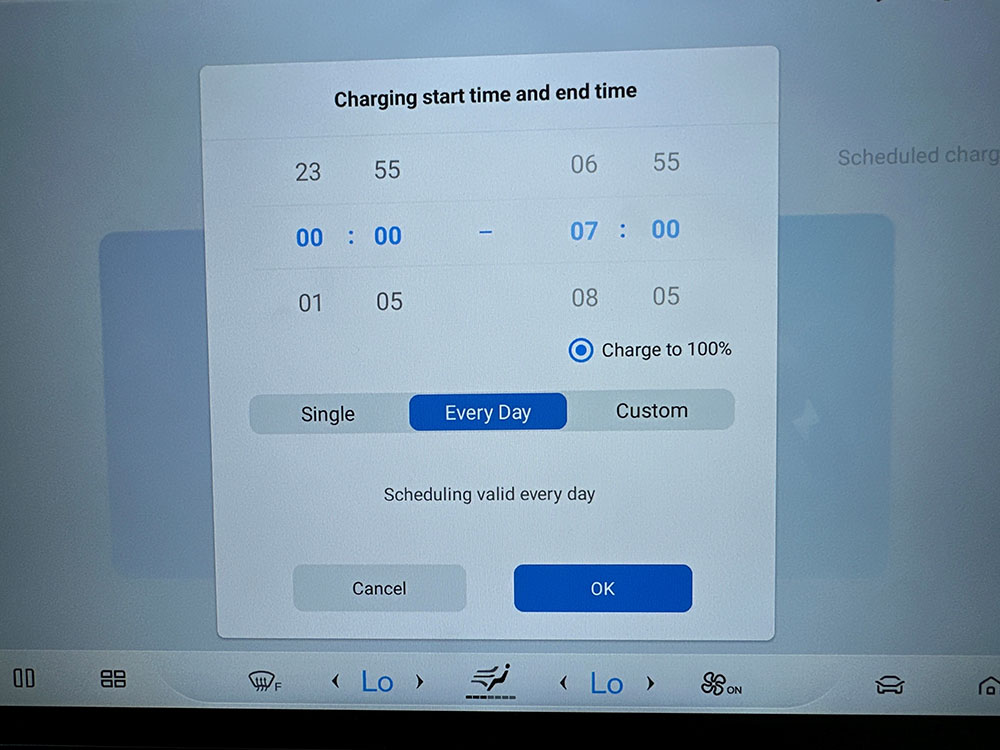
Off Peak Charging Schedule
Data from the Power Provider Smart Meter (the house was only pulling < 200w and the Hot water system was not on)
Notes
We can't seem to charge if you are in the car and in the charge window (exit and lock required)?
When you look at the BYD Shark on the 8 A “granny” charger, the maths on paper and what you actually see in the real world don’t line up perfectly. At ~230 V, 8 A is roughly 1.8 kW coming out of the wall, but only part of that ends up in the traction battery. The rest is chewed up by fixed overheads: the onboard charger electronics, coolant pumps, contactors, the 12 V system, battery management, and general “car awake” consumption.
Those fixed loads don’t care whether you’re pulling 8 A or 32 A – they’re more or less constant while the car is in a charging session. That means at low current (8 A) they are a big percentage of the total power, so your wall-to-battery efficiency might drop into the low-80% range and the charge feels slower than the kW number suggests.
As you increase the charge rate – say to 3.3 kW on a 15 A circuit, or to 5, 7 or 11 kW on a proper wall connector – those same fixed overheads become a much smaller slice of the pie. The onboard charger and the cooling system still burn roughly the same few hundred watts, but now you’re pushing far more energy into the pack, so the effective efficiency climbs into the 90–97% range.
Our Tesla with a 15 A mobile charger set to 13 A (around 3 kW) looks noticeably “snappier” and closer to the theoretical numbers, while the BYD on an 8 A power brick feels sluggish: the Tesla is simply running the hardware in a more efficient part of the curve where overheads are a smaller percentage.
| Vehicle / Setup | Input Voltage (V) | Charge Current (A) | Approx. Wall Power (kW) | Assumed Wall→Battery Efficiency | Energy to Battery per Hour (kWh) | Notes |
|---|---|---|---|---|---|---|
| BYD Shark on OEM 8 A brick | 230 | 8 | ≈ 1.8 | ≈ 82–85 % | ≈ 1.5 | Low current, fixed overheads are a large percentage; it feel “slow” to charger for the kW going in when compared to a Tesla. The Shark is about 70% efficient a 240V/8A. Moving to a higher kW charger will increase the charge rate., |
| Tesla on 15 A outlet (limited to 13 A) | 230 | 13 | ≈ 3.0 | ≈ 93–95 % | ≈ 2.8–2.9 | Higher current, same kind of overheads but smaller percentage; much closer to theoretical charge rate. |
| AC Charge Power from Wall (kW) | Example Current @ 230 V (A) | Assumed Fixed Overhead (kW) | Power Actually Reaching Battery (kW) | Effective Wall→Battery Efficiency | Comment |
|---|---|---|---|---|---|
| 1.8 | ≈ 8 | 0.3 | 1.5 | ≈ 83 % | “Granny” / low-amp charging; overhead dominates. |
| 3.3 | ≈ 14–15 | 0.3 | 3.0 | ≈ 91 % | Typical 15 A single-phase; much better utilisation. |
| 5.0 | ≈ 22 | 0.3 | 4.7 | ≈ 94 % | Mid-range AC wallbox, overheads now small. |
| 7.0 | ≈ 30 | 0.3 | 6.7 | ≈ 96 % | Common “7 kW” home charger; very efficient in practice. |
| 11.0 | 3-phase, ≈ 16 A/phase | 0.3 | 10.7 | ≈ 97 % | High AC rate; fixed overhead is almost negligible percentage-wise. |
TLDR: Charging on 8A is OK but will take longer. The faster he AC charger (Amps/Watts) the more efficient and quicker it will be. If you plan to charge in off peak get a faster charger for daily EV driving.
For someone coming straight from an ICE car, none of this would feel like a big deal - you fill the tank, reset the trip meter, and off you go. But after two years in a full BEV, you get used to incredibly accurate range estimates, predictable charging behaviour, and very high efficiency, so shifting to a PHEV with a small battery and different charging logic is a mental reset. You start second-guessing every number the car gives you, not because it’s broken, but because you’re used to a purer electric system.
In reality, PHEVs, BEVs and all electric drivetrains involve a bit of maths and a bit of trust. And honestly, that becomes half the fun - treating it like a small puzzle where you trust but verify, learn how the car behaves, and eventually settle into a new rhythm where the numbers make sense and the range anxiety fades away again.
A petrol car barely asks anything of your brain: a simple needle from “E” to “F,” a rough idea of how many kilometres you’ve got left, and the knowledge that a servo is always a few minutes away. Electric driving is different — not harder, just more layered. You’re thinking about remaining range, current consumption, where the battery percentage will land after a trip, and how long a charge will take at the speed you're plugged into. It’s a shift from a binary fuel gauge to a small ecosystem of numbers. Once you get used to it, it becomes second nature, but the mental load in the early days is definitely heavier because the system gives you more data and more ways to optimise your driving.
Faster Charging
We will invest in a Gen 3 Wall Connector - 7.3m, Our Tesla and Shark support 11kW AC charging.
AC vs DC Charging: What You Need to Know
More to come as we test AC and DC chargingReal-World Fuel and Energy Consumption
Tba: We will report back over time.Range Testing and Hybrid Mode Behaviour
So far we have driven over 140km and not touched a drop of Petrol.
Tba: We will report back over time.Regenerative Braking and Energy Recovery Insights
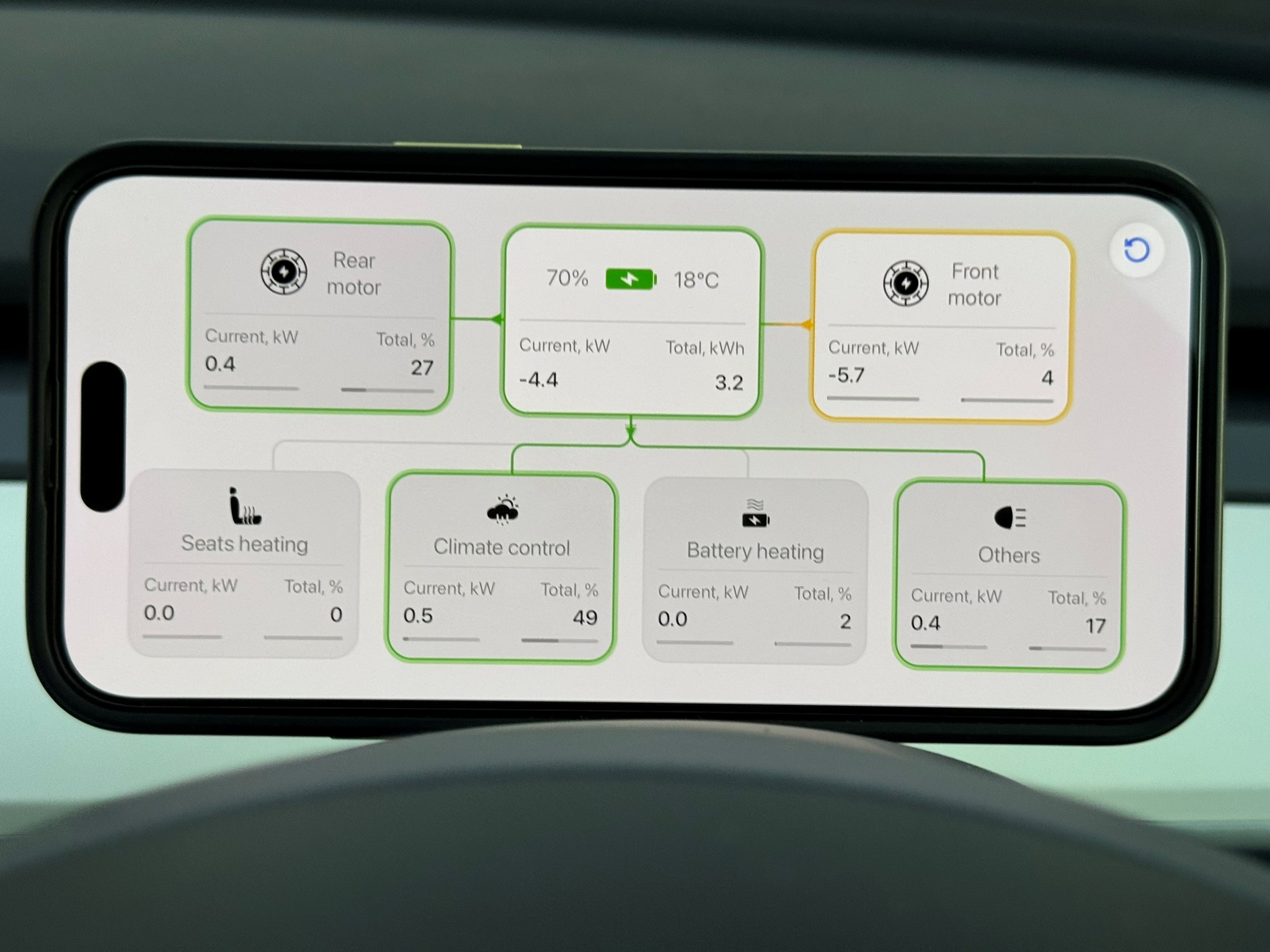
We are unable to see the Realtime regen or energy usage like we do in the Tesla with a Teslogic but so far so good. The Shark has not touched a drop of petrol, yet.
 Tba: We will report back over time.
Technical Analysis and Data
Tba: We will report back over time.Telemetry and Efficiency Logs
Tba: We will report back over time.Charging Curve and Battery Temperature Tests
We are unable to hit the maximum AC charging at home and DC public charging is cappe dat 50kW so there is not much to report here.
BYD do not publish the battery charging curve unlike my Tesla Model Y Long Range Charge Curve
Software Updates and Firmware Behaviour
BYD Shark 6 tested AGAIN: Can it now pass our tests? The results surprised us...
The car was delivered with Software version 1.x and we are waiting for 2.1
Smart Systems and Driver Assistance Review
Day 1 and 2 was loads of mario style sounds (with no screen notifications) that we need to learn (Speeding, lane assist, driver alert etc)
Tba: We will report back over time.Off Road Camping
Without beating around the bush, Yes, the Shark is great off road

-31.9188931,151.3358074

-31.9260751,151.3418621
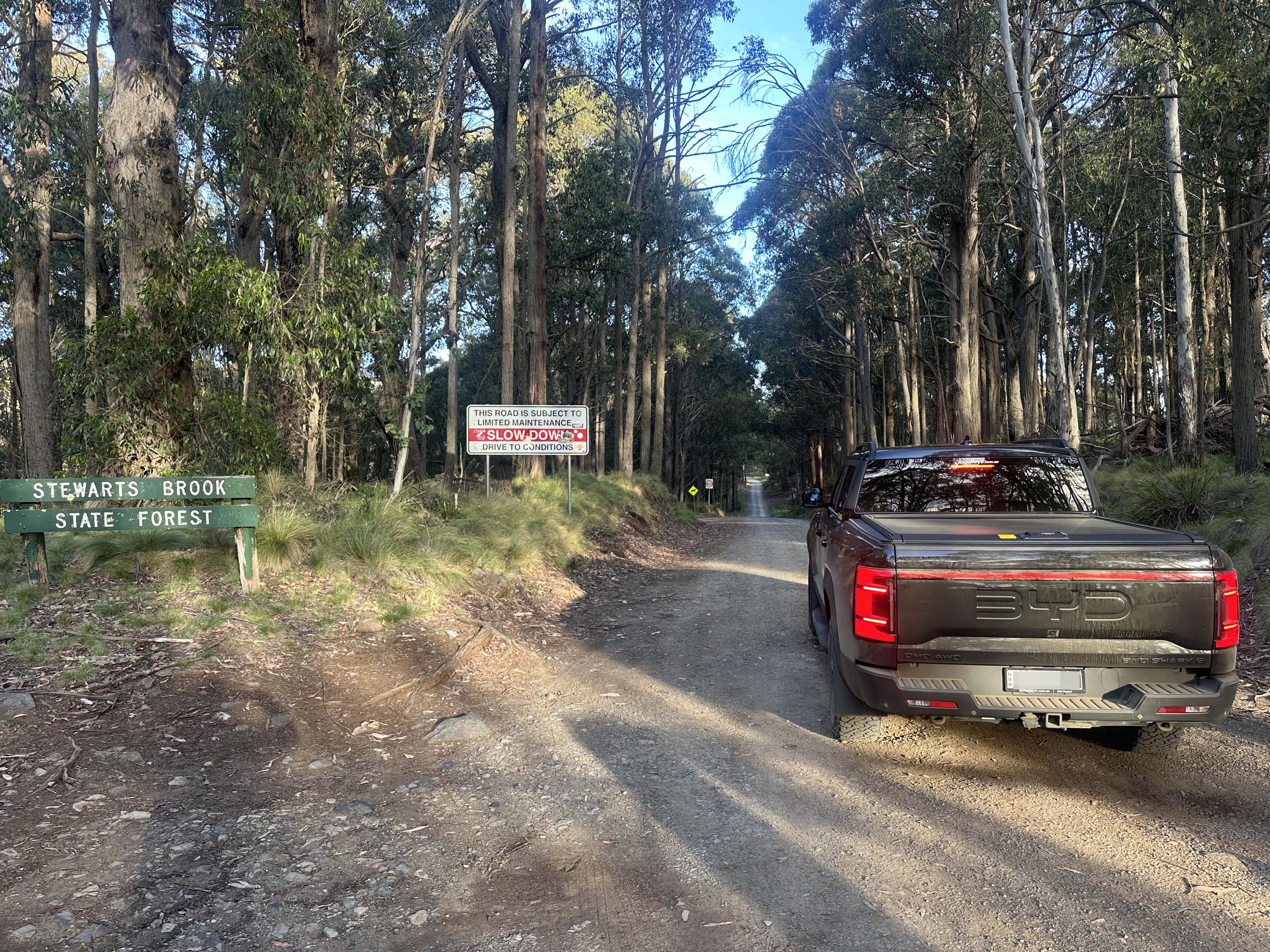
-31.93314,151.3474232
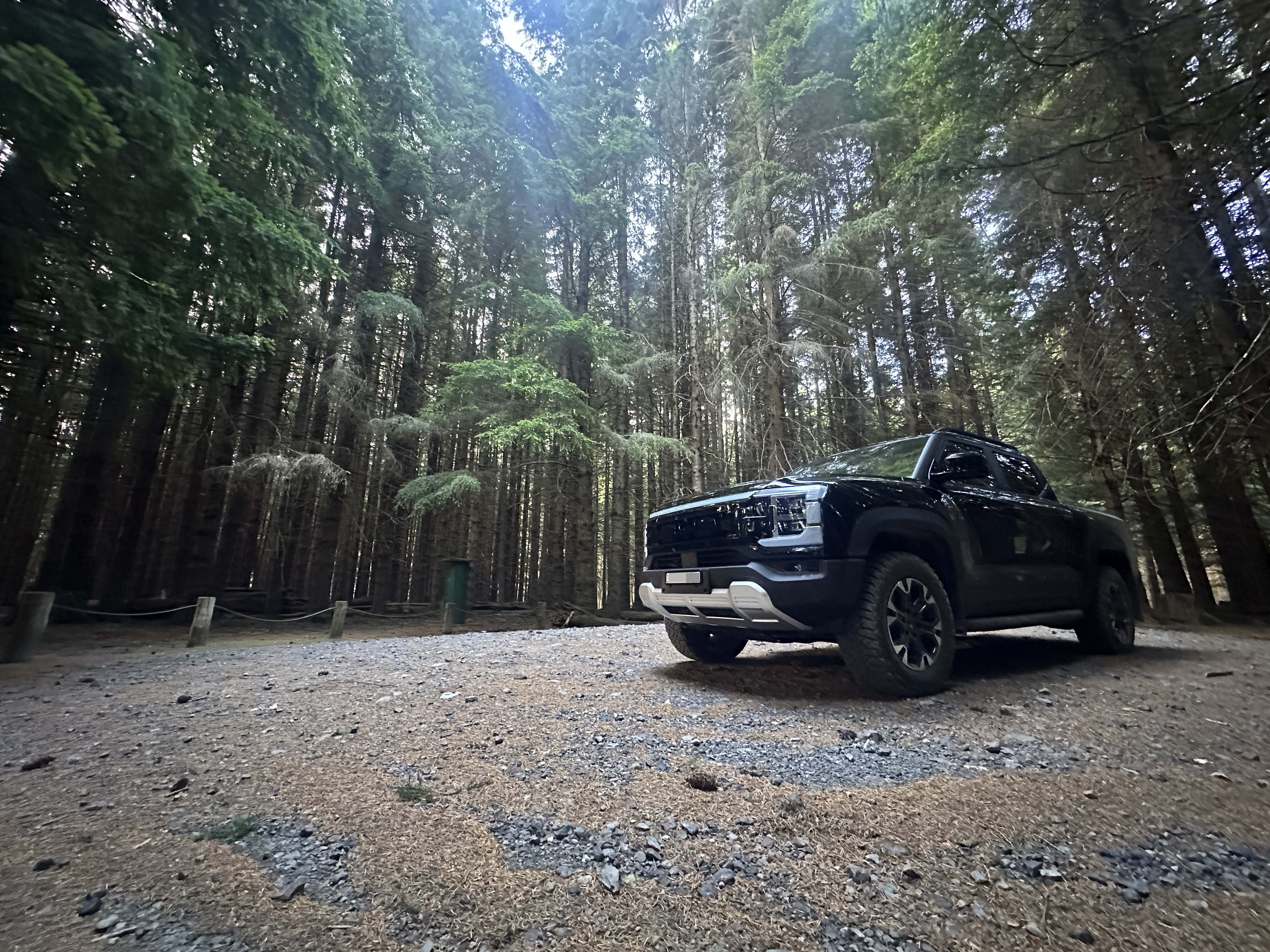
-31.9380648,151.3706859

-31.9565183,151.4256441

-31.917696,151.483194

-31.9134938,151.5033444
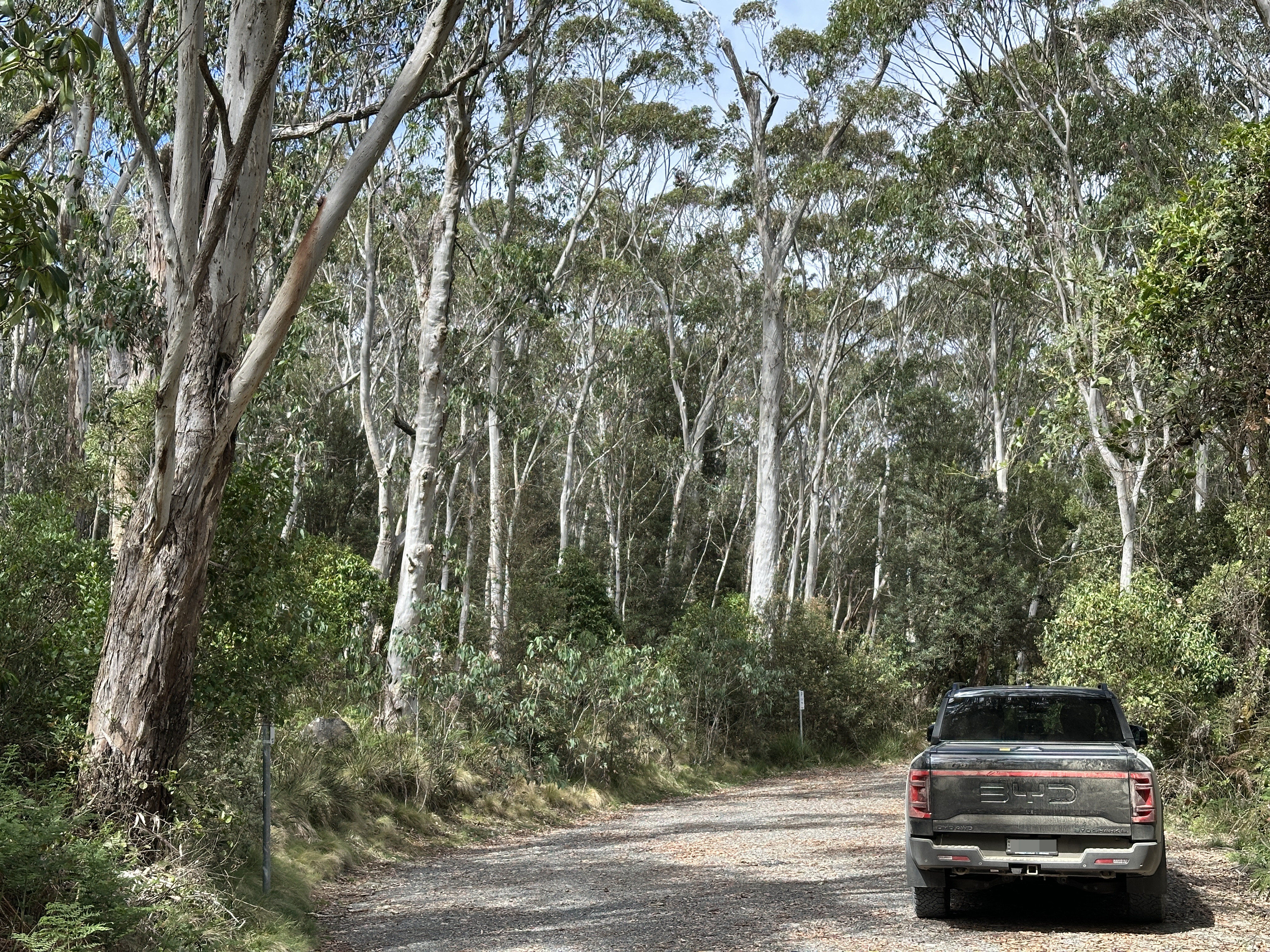
-31.9134938,151.5033444
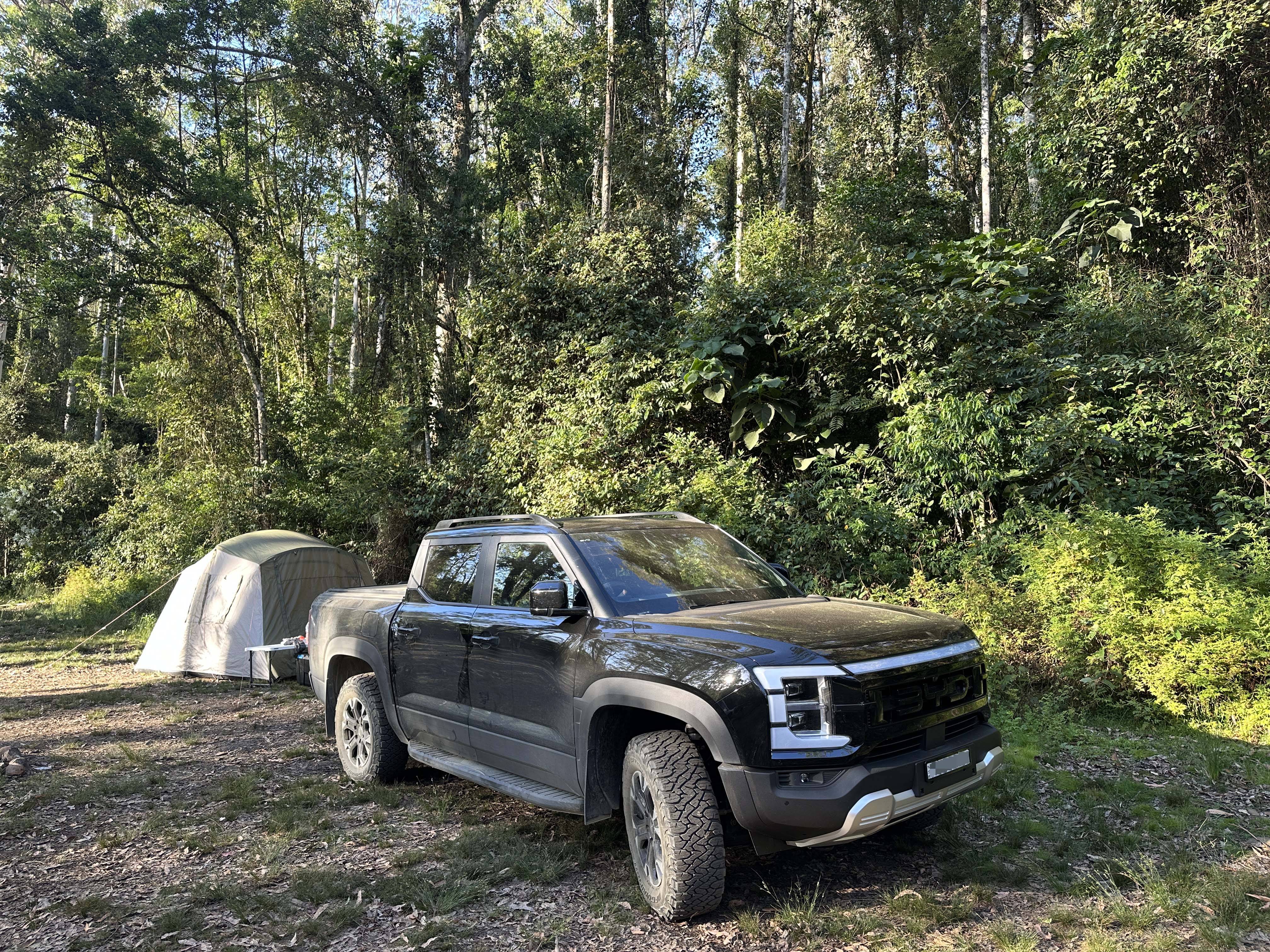
-32.1554901,151.4877389
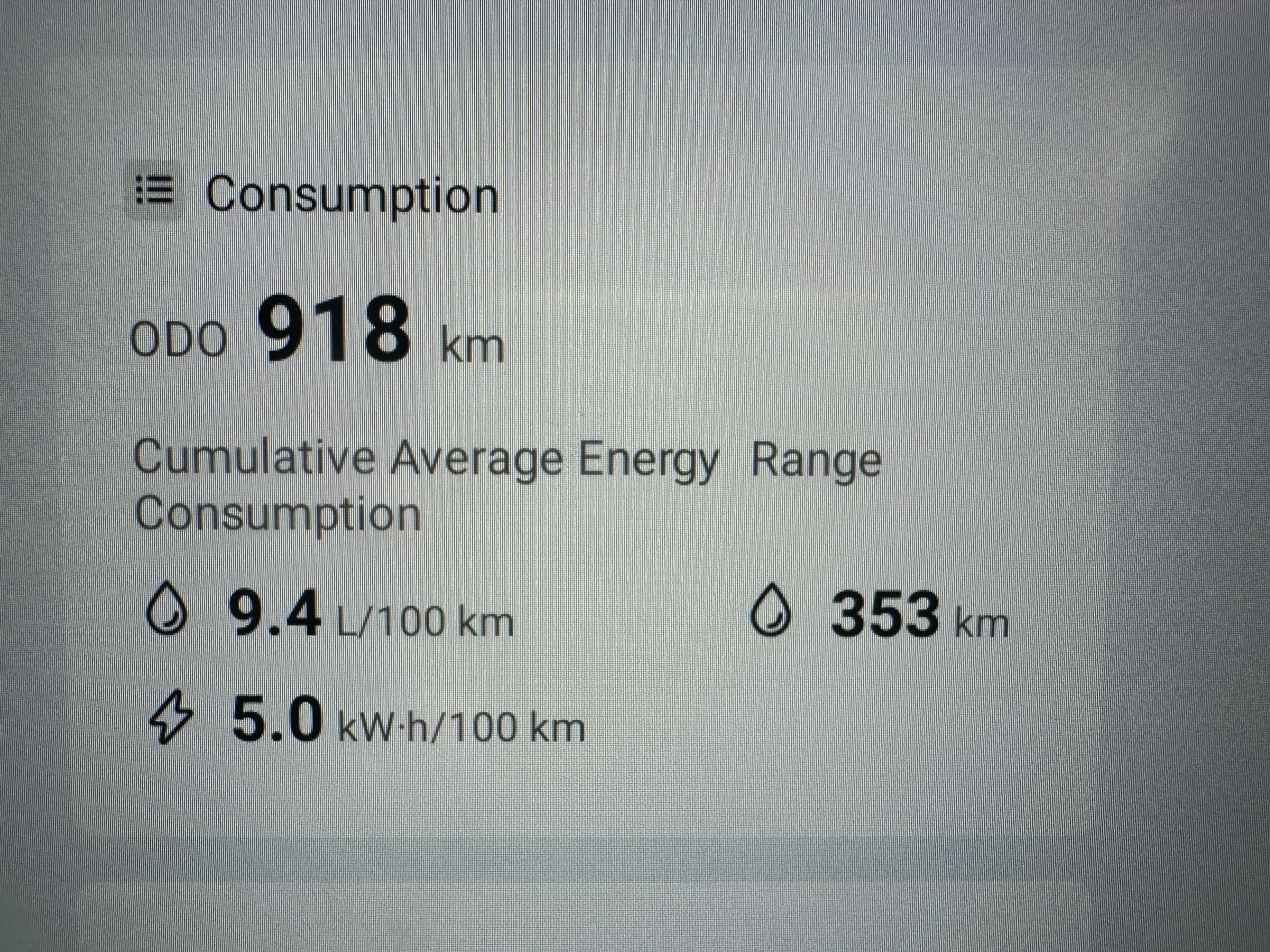
Fuel/Electricity Consumption
- 4 people
- 1,300m elevation climb (with many hills)
- A lot of cargo)
- Not driving slowly
- Strong headwind home
Everyday Ownership
After 2 weeks we are impressed. We are not massive camping or 4WD people but the Shark has done everything we have thrown at it (City Driving, Highway, Steep Gravel Roads, Camping, Tip Runs, carrying cargo).
MadMatt 4WD: BYD Shark 6 long(ish) term (8 Month) review!
Living with the BYD Shark 6 Day-to-Day
Tba: We will report back over time.Maintenance, Servicing, and Costs
We have been informed to occasionally use the Petrol Engine to keep fluids moving and not use it in pure EV mode.
Tba: We will report back over time.Practicality: Storage, Cabin, and Comfort
Tba: We will report back over time.After market modifications and accessories
We will add more when we have had a play with the Shark (Has not been delivered yet)
- BYD Shark 6 Boot Mat | Waterproof Custom-Fit Cargo Liner | Heavy-Duty
- BYD Shark 6 Dash Mats Black Suede leather
- BYD Shark 6 Door Handle Storage Box
1. https://fitmybyd.com.au - Shark 6 Accessories
Purchased
Maybe Buy Later
Alternate version to dealer ones
2. https://eevastore.com.au - Shark 6 Accessories
Purchased
3. https://www.topbyd.com/en-au/ - Shark 6 Accessories
4. https://www.aliexpress.com/ - Shark 6 Accessories
5. https://www.aliexpress.com/ - TPU For BYD Ute Shark Base 2024-2025 Full Car Precut Paint Protection Film Self-Healing PPF Body Sticker Anti-Scratch Resistant
Shark Teardown
Here are some good video from U.S. Manufacturing and prototype experts "Munro and Associate" who bought a BYD Shark (Unknown Variant (maybe a pre launch car)) tearing down and commenting on the car from a design perspective
Snip from their YouTube Channel: "Munro Live is a YouTube channel that features Sandy Munro and other engineers from Munro & Associates. Munro is an engineering consulting firm and a world leader in reverse engineering, costing, and teardown benchmarking."
My TLDR of these videos: Not everything is perfect (Munro and Associates make their coin from advising designs) but this is good value for money and no expense was spared on many parts.
BYD Shark (Pre Launch Model: On the Hoist & Under the Hood
Breakthrough or Bust? BYD Shark Interior Review
BYD Shark Frame & Engine – Innovation or Unnecessary Complexity?
The BYD Teardown Begins! Shark Centre Console, Seats, & Front Fascia
Shark Attack! Breaking Down BYD’s Battery Pack
There's a Monster Under the Bed of the BYD Shark!
BYD Shark 6 12V Running Cables under Trims, Switch Panel & Tub Tray Access
Links
Tips
If the Fuel Guage does not increase after filling up with Petrol
- While in Park: Turn the car off and back on Orange button
- Or While in Park: Press the Orange button for 5 seconds(And the fuel estimate will recalibrate)
- Or While in Park: Press the volume button for 10 seconds to reboot the car
This only happened once when we filled up at a Petrol Station on an extreme slope.

Annoying: Lane Keeping Warning
- If Lane Keep Assist or Speed Warnings are annoying Swipe down from the top of the screen and click the icon to disable
Annoying Over Speed Warnings
- If over speed warning is annoying (The detected road speed is not perfect)you Swipe down from the top of the screen and click the icon to disable
Insights and Conclusions
Our Original Goals and Assumptions
- 100% Day to Day Electric only driving?
- However we will need to use the petrol engine every now and again to keep the juices flowing
- We will get a 7kW wall charger to share between cars fighting over 1 plug is not idea.
- Recharge at night with off peak renewable grid power
- You cannot set the charging AMPS
- The included BYD charger can only charge at 1.8kW (we are used to the Tesla Mobile charger at 13A on a 15A plug providing 3kW)
- An off peak charging window can be set but a true estimated time is not accurate.
- You cannot set the charging AMPS.
- If you set a charging window and select the "100%"" radio button it acts like a Checkbox allowing charging past the window.
- Slow EV Charging
- Bunnings, tip and trips with the dogs
- Light to Medium Off Roading
Day 2 Reality: We are 140km in and have not touched 1 drop of Petrol
Day 2 Reality: This is working but the BYD has generic charging UI
Week 2 Reality Update
Day 2 Reality: We have purchased a cargo net and are preparing a camping trip
Day 2 Reality: Test on nearby tracks (35 deg dirt tracks) are a breeze
What we have learned from buying and testing the BYD Shark 6
Strengths, Weaknesses, and Future Improvements
Pros
- Daily EV Only Driving is possible (Zero Petrol).
- Comfortable vehicle to drive.
- The Battery + Petrol just works, no need to treat it like an EV. Just get in an drive (EV or HEV Mode) and the car does the rest.
Cons
- The Supplied BYD Wall Charger (240V 10A) is slow. Expect no more than 20% charge in 7 hours, If you want faster charging get a 7kW wall charger.
- A bit thirsty (Petrol) when loaded up for or whne you are using Petrol to chareg the battery.
- No sign of OTA Updates, We are still on v1.1. I am hearing good things from Update v2.1
Is the BYD Shark 6 Worth Buying (3 months on)?
Tba: We will report back over time.Final Thoughts and Next Steps
We will live with the car for a few weeks and share our thoughts
Tba: We will report back over time.